
Key Takeaways
- Shut off the main water supply, secure the area, and check for gas leaks or exposed wiring before entering.
- Document all storm damage with photos, timestamps, and an inventory for insurance claims.
- Remove standing water quickly using pumps or wet vacs, then dry carpets, walls, and floors thoroughly.
- Keep indoor humidity below 60% with dehumidifiers and ventilation to prevent mold growth.
- Call restoration professionals for hidden moisture detection, structural assessment, and safe cleanup guidance.
Stop the Water at the Source
Before you start any cleanup, stop the water at the source so the damage doesn’t spread. You’ll protect your home faster when you shut off the main supply, close exterior valves, and redirect runoff away from entries.
Use water diversion techniques like grading loose soil, clearing drains, and extending downspouts if you can do so safely. Set temporary barriers with sandbags, plastic sheeting, or weighted boards to block incoming water at doors, vents, and low openings.
Work methodically and check each point where water enters, because a small leak can keep feeding the area. You’re not handling this alone; these steps give your crew, neighbors, or contractor a controlled starting point and help you regain order quickly.
Check for Damage and Safety Hazards
Once you’ve stopped the water at the source, inspect the area for structural damage and safety hazards before you begin cleanup.
Start your storm assessment by checking ceilings, walls, floors, and windows for sagging, cracks, or shifting. If you smell gas, hear hissing, or see exposed wiring, leave the area and call the proper utility company.
Use a safety checklist: wear sturdy boots, gloves, and eye protection; shut off power if it’s safe; and keep kids and pets away from debris.
Watch for slippery surfaces, broken glass, nails, and weakened supports that can fail under load. Trust your instincts; if something looks unstable, don’t enter it.
You’re not handling this alone—careful inspection helps protect everyone and sets your team up for a safer cleanup ahead.
Document Damage for Insurance Claims
After you’ve confirmed the area is safe, document the damage thoroughly for your insurance claim. Start with wide-angle photos of every affected room, then move closer for damaged materials, water lines, and broken fixtures.
Capture timestamps if your phone allows it, and keep your claim documentation organized in one folder. Write a brief inventory of items damaged, noting brand, model, age, and estimated value.
Save receipts, repair quotes, and any emergency expense records. If you can, video the space slowly so adjusters can see the full context.
Back up all photo evidence to cloud storage and email copies to yourself. Clear records help you speak with confidence, stay supported, and move forward with your neighbors after the storm.
Inspect for Burst Pipe Damage
Check the pipe joints first for cracks, separation, or corrosion, since storm pressure can weaken these connections fast.
Look for active leaks, damp insulation, or water stains around walls, ceilings, and floors to catch hidden damage early.
If you spot any sign of a burst pipe, shut off the water supply right away to limit further flooding and protect your system.
Check Pipe Joints
Inspect pipe joints carefully for signs of burst damage, including dripping water, corrosion, loose fittings, and wet insulation.
During pipe inspection, focus on joint integrity at elbows, couplings, and shutoff connections, since storm stress often weakens these points first. You can tighten accessible fittings with the proper tool, but don’t overtighten or force damaged threads.
If you see mineral buildup, cracked sealant, or distorted metal, mark the area and keep traffic clear around it. This helps your household stay organized and safe while you assess the system. A steady, methodical check gives you confidence and keeps your cleanup team on the same page.
When you document each joint, you make repairs easier for a plumber and reduce the chance of hidden structural trouble.
Look For Leaks
Even small leaks can signal burst pipe damage, so move through the area methodically and look for fresh water, damp walls, puddles, ceiling stains, and dripping around joints, valves, and appliance connections.
Use steady leak detection: feel along pipes for cold spots, listen for hissing, and check under sinks, behind toilets, and near water heaters.
If you notice staining below an upper level, include a roof inspection to rule out storm entry before you assume the pipe failed.
Take photos and mark each concern so your cleanup team can compare changes later. You’re not alone in this process; careful observation helps your household stay organized and confident while you document every sign of trouble.
Shut Off Water
If you suspect burst pipe damage, shut off the main water supply right away to stop additional flooding and limit structural damage.
Then open nearby faucets to relieve pressure and drain remaining water from the lines.
Check exposed pipes, the water meter, and any wet drywall or ceilings for cracks, splits, or active dripping.
If you can’t reach the valve safely, ask a trusted neighbor or licensed plumber for help.
Keep electrical panels and outlets away from wet areas to protect plumbing safety and your crew’s well-being.
Once the water is off, document damage with photos and mark affected rooms for repair.
You’re not handling this alone; smart, calm action now helps your home recover faster and keeps your household safer together.
Remove Standing Water Fast
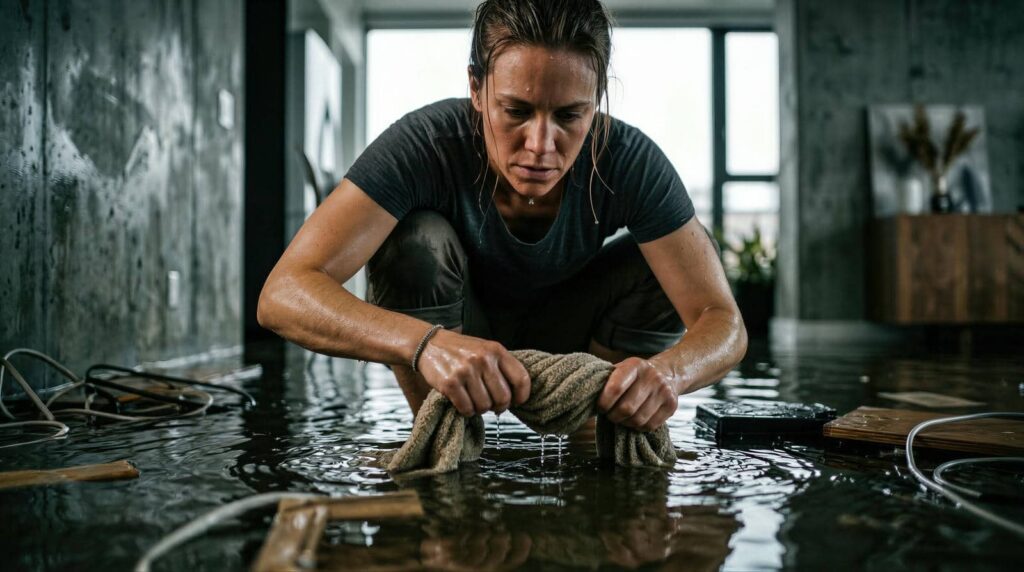
Pump out standing water as soon as you can to limit further damage and reduce the risk of mold, rot, and electrical hazards. You can use water removal techniques like submersible pumps, wet vacs, and buckets for small areas.
Follow emergency response tips by wearing boots, gloves, and eye protection, and keep kids and pets out of the zone. Work from the lowest point outward so you don’t trap runoff, and discharge water away from the foundation.
Check for hidden pockets near walls, under appliances, and in crawl spaces, since lingering water can spread fast. If the volume is large or contaminated, call a pro right away.
You’re not handling this alone; your cleanup crew can move quickly and keep your space safer for everyone.
Dry Out Carpets, Walls, and Floors
Once the standing water is gone, you need to dry carpets, walls, and floors quickly to stop mold, warping, and hidden structural damage.
Start carpet drying with strong water extraction, then lift edges and promote air circulation with fans. Run dehumidifier usage nonstop for steady moisture removal and better mold prevention.
For wall restoration, remove baseboards if needed, wipe surfaces, and keep airflow across the wall area.
Check floor treatment needs on wood, tile, or laminate, and dry each surface according to its material.
If insulation drying is required, use targeted airflow and low humidity until it feels fully dry.
You can also support odor elimination by keeping the space open and clean.
Move methodically, and your crew will restore the room safely, together.
Check Hidden Moisture Behind Walls
After the visible water is gone and the room feels dry, you still need to check for moisture trapped behind walls, trim, and insulation. A careful wall inspection helps you catch hidden moisture before it weakens structural integrity or causes more water damage.
Use moisture detection tools, watch humidity levels, and look for cool spots with thermal imaging. If you notice soft drywall, staining, or a musty feel, open the area for a closer check. Keep air circulation moving with fans and vents so trapped dampness can escape.
- Probe baseboards and outlet edges
- Compare suspect areas with dry rooms
- Record readings during the day
- Get a professional assessment if values stay high
Stop Mold Before It Starts
Even when surfaces look dry, you can still get mold growth if hidden moisture lingers, so act quickly to keep damp areas from becoming a problem.
For solid mold prevention, improve air circulation with fans, open vents, and use ventilation strategies that move humid air out.
Watch humidity control closely; aim for indoor levels below 60%, and step up dehumidifier usage in enclosed rooms.
Choose material selection wisely by favoring fast-drying finishes and adding moisture barriers where water can enter.
Apply approved surface treatments on vulnerable framing or drywall, then schedule routine inspections to catch new damp spots early.
Climate considerations matter too, because warm, wet conditions raise risk.
You’re not alone—these steps help your crew protect the space and stay ahead of mold.
Sanitize Surfaces After Floodwater
When floodwater has touched a surface, clean it first, then sanitize it with an EPA-registered disinfectant suited to the material. Your surface cleaning should remove mud, grime, and residue before you apply any sanitizer.
Choose disinfectant choices that match wood, tile, metal, or sealed counters, and follow label contact times exactly. You’re not alone in this step; many homeowners handle it safely with patience and care.
- Wear gloves and eye protection.
- Mix or apply products as directed.
- Keep the surface wet for the full dwell time.
- Rinse food-contact areas after sanitizing.
Afterward, let the area dry fully and check for lingering odor or film. If you stay systematic, you’ll restore a safer, cleaner space without extra stress.
Call a Storm Damage Restoration Team
Call a storm damage restoration team as soon as the area is safe to enter, because they can assess structural damage, remove hidden moisture, and reduce the risk of mold and further deterioration.
You’ll get trained technicians who use moisture meters, infrared cameras, and controlled drying equipment to find problems you can’t see. Keep their emergency contacts handy and share your insurance details, photos, and damage notes when you call.
They can secure openings, extract water, and start restoration services fast, which helps protect framing, insulation, and flooring.
Working with a trusted crew means you’re not handling every step alone; you’re joining neighbors who know recovery takes teamwork.
Follow their instructions, stay out of unsafe rooms, and let the professionals guide cleanup with confidence.
Frequently Asked Questions
How Do I Prevent Future Storm Damage to My Home?
You can reduce future storm damage by strengthening your home with storm resistant materials, keeping up with roof maintenance, sealing openings, and trimming trees. You’ll protect your space, lower repair risks, and feel more secure.
What Items Should I Discard After a Flood?
Discard soaked drywall, insulation, carpets, upholstered furniture, food, medications, and any flooded appliances. If you smell a musty drumbeat, discard porous items showing mold growth. You’ll protect your home and join recovery with confidence.
Can I Stay in My House During Cleanup?
You can stay only if you’ve confirmed structural safety and taken safety precautions; otherwise, choose temporary housing. Keep you and your household together, ventilate damp areas, wear protective gear, and avoid contaminated rooms during cleanup.
How Do I Protect Electronics From Storm Damage?
Place electronics like sheltering birds: unplug them, store them in waterproof storage, use surge protectors, choose safe locations, keep backup devices ready, and review electronics insurance before power outages threaten your home.
What Should I Pack in an Emergency Storm Kit?
Pack storm essentials: water, nonperishable food, flashlight, batteries, first aid, medications, chargers, radio, blankets, copies of IDs, cash, and emergency supplies. You’ll stay ready, calm, and connected when conditions turn rough.
Final Thoughts
When the storm finally moves on, you become the steady lighthouse in the dark. Shut off the water, check the wreckage, and photograph every broken board and soaked floor. Dry hidden spaces fast, or mold will settle in like an unwelcome tenant. Disinfect, ventilate, and call a restoration team when the job’s too large. With careful action, you don’t just clean up damage—you guide your home back to safe harbor.