
Did you know that nearly 50% of homes affected by flooding develop mold within 24 to 48 hours? This rapid growth can pose serious health risks and structural damage if not addressed swiftly. Understanding effective mold remediation strategies is essential for homeowners facing this challenge. From immediate water removal to proper cleanup techniques, there are critical steps you need to know to protect your home and health. What should your first actions be?
Key Takeaways
- Act quickly to remove standing water and extract moisture from affected areas to prevent mold growth within 24 to 48 hours.
- Identify visible mold signs and musty odors, and use moisture measurement techniques to assess the extent of mold presence.
- Gather essential cleaning supplies and safety gear, including biocide cleaner, respirators, and gloves, before starting the cleanup process.
- Dispose of mold-infested materials in sealed bags and clean non-porous surfaces thoroughly to prevent spore spread.
- Consider hiring mold remediation experts for extensive growth or persistent odors to ensure safe and effective mold removal.
Understanding the Impact of Flood Damage on Homes
When floodwaters invade your home, they don’t just cause immediate structural damage; they also create an environment ripe for mold growth.
In the flood aftermath, the moisture seeps into walls, carpets, and furniture, fostering conditions for mold spores to thrive. Understanding the extent of home damage is vital for effective remediation.
Even minor leaks can lead to significant issues if not addressed promptly. You might notice discoloration or a musty odor, signaling mold’s presence.
It’s important to recognize that mold can compromise your home’s air quality, posing health risks. By identifying the initial damage and potential mold sources, you can take the first steps toward restoring your home, ensuring it remains a safe and welcoming space for you and your loved ones.
Step-by-Step Guide to Drying Your Home Effectively
To effectively dry your home after flood damage, it’s crucial to act quickly and methodically. Start by removing any standing water using pumps or buckets.
Once the bulk of the water is gone, focus on moisture extraction from walls, floors, and furnishings. Open windows to promote air circulation and use fans to enhance evaporation. If necessary, deploy dehumidifiers to further reduce humidity levels.
Check hidden areas like basements and crawl spaces, making sure every corner is addressed. Remove soaked materials that can’t be salvaged, such as carpets or drywall.
Regularly monitor moisture levels with a hygrometer to guarantee your home is drying efficiently. By following these steps, you’ll create a welcoming environment, free from the risks of mold growth.
How to Identify Mold After Flooding?
After flooding, identifying mold is essential to preventing further damage.
You should look for visible signs of mold growth, notice any musty odors, and use moisture measurement techniques to assess your environment.
Addressing these factors effectively can help you tackle mold issues before they escalate.
Visible Mold Growth Signs
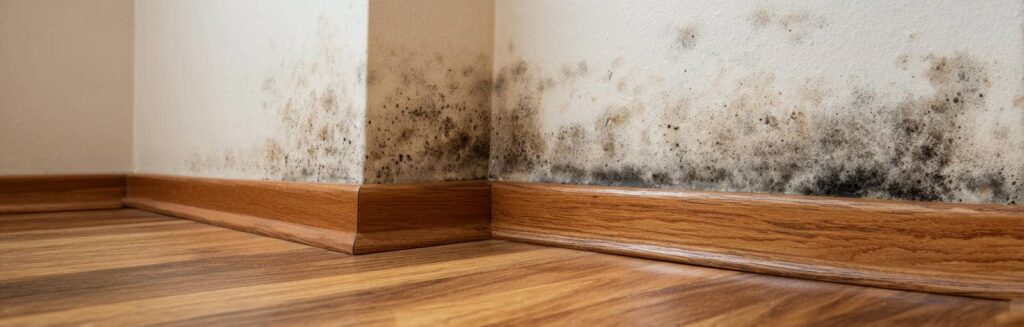
Visible mold growth often manifests as dark spots or fuzzy patches on surfaces, signaling a potential problem in areas affected by flooding. Identifying these signs early can help you manage different mold types that thrive under specific growth conditions.
Here are key indicators to look for:
Color Variations: Mold can appear in various colors, including black, green, and white, each indicating different mold types.
Texture Changes: Fuzzy, slimy, or velvety textures on surfaces can point to mold presence.
Surface Damage: Peeling paint or warped drywall may suggest underlying mold growth.
Condensation: Persistent moisture on windows or walls can create the perfect environment for mold to flourish.
Stay vigilant to protect your space from further damage.
Musty Odor Detection
As you navigate spaces affected by flooding, a musty odor can be a telltale sign of mold lurking within hidden corners.
This musty smell often arises from damp materials, such as drywall or carpet, and can point to specific odor sources where mold may thrive.
When you detect this unpleasant scent, it’s essential to investigate further. Check areas that retain moisture, like basements, attics, and behind furniture.
Pay attention to air quality; a persistent musty odor can indicate mold’s presence, even if you can’t see it.
Trust your senses—if something smells off, it’s worth addressing immediately.
Identifying these odor sources early can prevent larger mold problems and help maintain a healthier living environment for you and your loved ones.
Moisture Measurement Techniques
One effective approach to identifying mold growth in flooded areas is through moisture measurement techniques.
By utilizing these methods, you can accurately assess and address potential mold issues before they escalate.
Here are four key techniques to evaluate:
Moisture Sensors: Place these devices in various locations to monitor moisture levels continuously.
Humidity Mapping: Create a detailed map of humidity levels throughout the affected area to pinpoint problem zones.
Surface Moisture Testing: Use specialized tools to measure moisture content in building materials.
Thermal Imaging: Employ infrared cameras to detect hidden moisture behind walls or beneath floors.
Why Timely Mold Remediation Is Critical After a Flood
When floodwaters recede, the urgency for mold remediation can’t be overstated, as mold can begin to grow within 24 to 48 hours in damp environments.
If you delay action, you risk extensive mold growth, which can jeopardize your health and prolong your flood recovery process. Mold not only damages your property but can also lead to respiratory issues and allergic reactions.
Timely intervention is essential to mitigate these risks and restore your living space. By addressing the problem quickly, you can prevent mold from spreading and minimize repair costs.
Prioritizing swift mold remediation helps create a safe, healthy environment, allowing you and your loved ones to reclaim your home after a devastating flood.
What You Need for Effective Mold Cleanup
To effectively tackle mold cleanup, you need to gather essential cleaning supplies and guarantee you have the right safety gear.
These items are vital for both efficient mold removal and protecting your health during the process.
Understanding what specific tools and protective equipment you’ll require sets the foundation for a successful remediation effort.
Essential Cleaning Supplies
Effective mold cleanup requires specific cleaning supplies that guarantee thorough remediation. To ascertain successful mold removal, you’ll need to equip yourself with the right tools and cleaning agents.
Here’s a list of essentials to help you tackle the task efficiently:
Biocide Cleaner: A powerful cleaning agent specifically designed to kill mold spores and prevent regrowth.
Scrub Brushes: Durable brushes to physically remove mold from surfaces, assuring a deep clean.
Mold-resistant Spray: An effective solution for treating porous materials and preventing future infestations.
Buckets and Rags: For mixing your cleaning solutions and wiping down affected areas.
Safety Gear Requirements
Cleaning supplies alone won’t guarantee your safety during mold cleanup. To effectively tackle mold, you need the right safety equipment and protective clothing.
Start with a high-quality respirator to shield your lungs from spores and other particulates. N95 masks are common, but consider a full-face respirator for added protection.
Wear gloves that are resistant to mold, such as nitrile or rubber, to avoid skin contact. Long-sleeved shirts and pants made from durable materials will help protect your skin.
Finally, goggles will prevent mold spores from irritating your eyes. Together, this gear creates a barrier against health risks and guarantees you feel secure while cleaning.
Prioritizing safety not only protects you but also fosters a sense of community responsibility.
Safe Removal Techniques for Moldy Materials
While mold can pose serious health risks, safely removing contaminated materials is crucial for restoring your home after a flood.
Employing effective mold removal techniques guarantees you minimize exposure and promote a healthy environment. Here are four essential steps to follow:
Seal Off the Area: Use plastic sheeting to contain mold spores and prevent cross-contamination.
Wear Protective Gear: Equip yourself with masks, gloves, and goggles to safeguard against exposure.
Remove Contaminated Materials: Carefully dispose of mold-infested items, such as drywall or insulation, in sealed bags.
Clean Surfaces: Use a mixture of water and detergent to clean non-porous surfaces, guaranteeing thoroughness.
Following these steps will facilitate safe contaminated material disposal and help restore your home effectively.
When to Hire Mold Remediation Experts?
How do you know when it’s time to call in mold remediation experts? If you notice mold growth exceeding ten square feet, it’s vital to seek a mold specialist consultation.
Timing considerations are essential; the sooner you act, the less likely you’ll face extensive damage or health risks. If you experience persistent musty odors, respiratory issues, or visible water damage, don’t hesitate to reach out for professional help.
Even if you’re unsure about the extent of the problem, experts can assess your situation and recommend necessary actions.
Preventing Future Mold Growth After Flooding
To prevent future mold growth after flooding, you need to implement regular inspections and maintenance of your property.
By identifying potential moisture issues early, you can address them before they escalate.
Additionally, effective moisture control solutions, such as dehumidifiers and proper drainage systems, are essential in creating an environment unfavorable to mold.
Regular Inspections And Maintenance
Regular inspections and maintenance are essential for preventing future mold growth after flooding, as even minor water damage can lead to significant mold issues if left unchecked.
By implementing a structured approach, you can protect your home and loved ones. Here are four key strategies:
Schedule Regular Mold Inspections: Make it a habit to inspect areas prone to moisture, like basements and attics.
Establish Maintenance Schedules: Create a timeline for checking plumbing and roofing systems to catch leaks early.
Monitor Humidity Levels: Use hygrometers to guarantee indoor humidity stays below 60%.
Educate Family Members: Share the importance of reporting any signs of water damage or mold promptly.
Effective Moisture Control Solutions
While flood damage can create a perfect environment for mold growth, implementing effective moisture control solutions can greatly reduce the risk of future infestations.
Begin by installing moisture barriers in vulnerable areas like basements and crawl spaces. These barriers prevent water from seeping in, creating a drier environment that discourages mold.
Additionally, consider various dehumidifier options to manage humidity levels effectively. Choose a model suited for your space; it should maintain humidity below 60%.
Regularly monitor moisture levels using a hygrometer to guarantee ideal conditions.
By proactively addressing moisture control, you’ll foster a healthier living environment, allowing you to feel secure and connected to your home.
Together, these strategies form a robust defense against mold growth in the aftermath of flooding.
Understanding Health Risks of Mold Exposure
Mold exposure poses significant health risks, particularly for vulnerable populations such as children, the elderly, and individuals with pre-existing respiratory conditions.
You should be aware of the potential mold symptoms and health effects that can arise from prolonged exposure. Here are four key considerations:
Allergic Reactions: Sneezing, runny nose, and skin rashes can manifest, leading to discomfort.
Respiratory Issues: Mold can aggravate asthma and other chronic respiratory diseases, causing difficulty breathing.
Neurological Effects: Some individuals report headaches, fatigue, and cognitive impairments linked to mold exposure.
Infections: Immunocompromised individuals may face serious infections due to mold spores in the air.
Being informed helps you protect yourself and your loved ones from these dangers.
How Humidity Control Aids Mold Remediation
After understanding the health risks associated with mold exposure, it becomes clear that effective mold remediation strategies are fundamental in mitigating these dangers.
One important aspect is humidity control. High humidity fosters mold growth, so employing humidity control methods, like dehumidifiers and proper ventilation, is imperative. By actively managing moisture levels, you create an environment that discourages mold proliferation.
Additionally, using humidity monitoring tools allows you to track moisture levels in real-time, ensuring you stay ahead of potential mold issues. Regular monitoring not only aids in immediate remediation but also helps maintain long-term mold-free conditions.
Frequently Asked Questions
How Long Does Mold Remediation Typically Take After Flooding?
Mold remediation typically takes one to two weeks, depending on the severity of mold growth and affected areas. Understanding the remediation timeline helps you manage expectations and guarantees thorough restoration of your space.
Can I Stay in My Home During Mold Remediation?
You shouldn’t stay in your home during mold remediation due to mold exposure risks. Consider temporary housing options to guarantee your safety and well-being while professionals address the issue effectively and restore your living space.
What Is the Cost Range for Professional Mold Remediation Services?
Mold remediation costs typically range from $500 to $6,000, depending on the severity and size of the affected area. Hiring professional services guarantees effective removal and minimizes health risks, making it a worthwhile investment for your home.
Will My Insurance Cover Mold Remediation After Flooding?
Isn’t it frustrating to deal with unexpected costs? Many insurance policies offer mold coverage, but it often depends on the cause. Check your policy details to determine if your flooding situation qualifies for remediation support.
Are There DIY Mold Remediation Methods for Small Areas?
Yes, you can safely clean small mold areas using vinegar or baking soda. For effective mold prevention tips, guarantee proper ventilation and keep humidity low. Always wear protective gear to safeguard your health during the process.
Summary
Tackling mold after flood damage isn’t just important it’s vital for your home’s survival. By following effective strategies like swift drying and proper cleanup, you can dramatically reduce health risks and safeguard your property. Don’t underestimate the impact of timely intervention; neglecting mold can lead to catastrophic consequences. Remember, staying vigilant and proactive is your best defense against future mold growth. Take action now, and guarantee your home remains a safe haven for you and your family.