
Just as a fire brigade responds swiftly to flames, a prompt reaction to water damage is essential for effective structural drying. Utilizing top techniques ensures you minimize damage and accelerate recovery, preserving the integrity of your structures. Understanding the science behind these methods and the equipment involved can greatly enhance your approach. However, are you aware of the common pitfalls that can undermine your efforts in this vital process?
Key Takeaways
- Advanced techniques expedite drying, significantly reducing the time structures are exposed to moisture and preventing extensive damage.
- Utilizing specialized equipment enhances evaporation rates, ensuring more efficient moisture removal from affected areas.
- Effective moisture control minimizes the risk of mold growth, safeguarding the health of occupants and the integrity of the structure.
- Proper techniques lead to fewer repairs and lower labor costs, resulting in long-term savings for property owners.
- Monitoring conditions during the drying process ensures optimal results and prevents complications in restoration efforts.
The Importance of Quick Response in Structural Drying
When a water intrusion occurs, responding quickly is essential to effective structural drying. A swift action minimizes water exposure, which can lead to extensive damage and costly repairs.
By prioritizing quick response, you protect the integrity of your structure and prevent mold growth and other secondary issues. Timing is vital; the longer water sits, the more challenging it becomes to restore the affected area.
Engaging professionals who specialize in rapid response can greatly enhance your damage prevention efforts. They utilize advanced equipment and techniques to expedite the drying process, ensuring your property remains safe and sound.
How Structural Drying Works: The Science Explained
Understanding how structural drying works involves grasping the principles of evaporation and the specialized equipment used in the process.
You’ll see that effective drying relies on manipulating temperature and airflow to accelerate moisture removal.
Evaporation Principles In Action
As moisture permeates structures, evaporation becomes a critical process for effective drying.
You need to understand that evaporation rates directly influence moisture removal efficiency. The faster the moisture evaporates, the quicker the drying process can occur. This is due to the principle that warmer air can hold more water vapor than cooler air, allowing for enhanced evaporation.
By increasing temperature and airflow, you facilitate this natural process, effectively reducing the moisture content within your structure. It’s crucial to monitor these conditions closely, as they play a significant role in achieving ideal drying results.
When you harness these evaporation principles, you ensure a thorough, efficient drying process, ultimately safeguarding your property and extending its lifespan.
Equipment And Techniques Used
Several key pieces of equipment and techniques are vital for effective structural drying. First, moisture detection tools like hygrometers and moisture meters help you measure moisture levels in materials, ensuring targeted drying efforts.
When it comes to drying methods, a combination of air movers and dehumidifiers is essential. Air movers circulate air, speeding up evaporation, while dehumidifiers extract moisture from the air, creating an ideal environment for drying.
Additionally, infrared heaters can be employed to warm surfaces, further enhancing moisture evaporation. By utilizing these advanced tools and techniques, you can greatly improve drying efficiency, minimize damage, and restore affected areas effectively.
Embracing these methods ensures your success and fosters a sense of community among restoration professionals.
Top Techniques for Effective Structural Drying After Water Damage
Effective structural drying after water damage is essential for preventing long-term issues like mold growth and structural deterioration.
Start with a thorough moisture assessment to identify affected areas and establish drying timelines. This step ensures you target the most critical spots effectively.
Use high-velocity air movers to expedite evaporation, while dehumidifiers help reduce humidity levels, preventing secondary damage.
Monitor moisture levels continuously to adjust your approach as needed, ensuring all materials reach appropriate dryness.
Additionally, consider utilizing heat sources to enhance drying efficiency, especially in cooler environments.
How Equipment Boosts Structural Drying Efficiency
To maximize structural drying efficiency, using advanced air movers and dehumidifiers is essential.
These tools considerably enhance airflow and moisture control, accelerating the drying process.
Advanced Air Movers
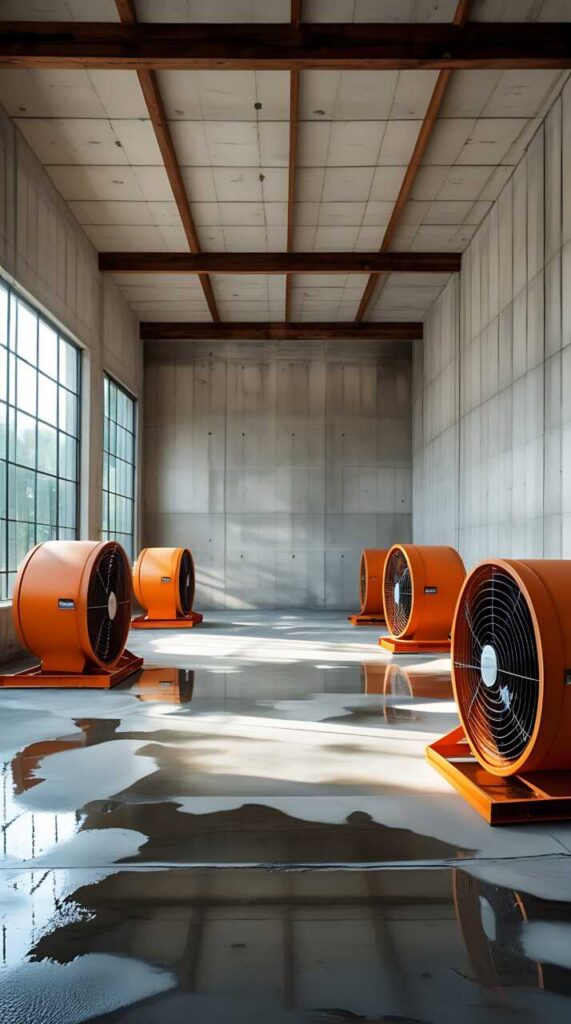
Advanced air movers play an essential role in enhancing structural drying efficiency by optimizing air circulation and reducing moisture levels in affected areas.
These specialized devices utilize advanced airflow technology to create a focused stream of air, which accelerates evaporation and supports effective moisture management.
When you deploy advanced air movers, you’re not just moving air; you’re strategically directing it to reach all surfaces, ensuring thorough drying.
Their versatility allows you to position them in various configurations, targeting problem areas while minimizing disruption to the environment.
By integrating these air movers into your drying strategy, you can notably shorten drying times, improve overall results, and achieve a more effective response to water damage.
Embrace this technology to elevate your drying efforts.
Dehumidifiers Enhance Speed
Dehumidifiers kick off the drying process by actively removing excess moisture from the air, greatly speeding up structural drying efforts.
By utilizing various dehumidifier types, you can tailor moisture control to your specific environment. For example, low-grain refrigerant dehumidifiers are ideal for colder conditions, while desiccant dehumidifiers excel in warmer, more humid settings.
This adaptability allows you to efficiently manage humidity levels, preventing mold growth and structural damage. As moisture levels decrease, the entire drying process accelerates, enabling quicker restoration times.
Using the right dehumidifier enhances efficiency and supports your goal of creating a safe, healthy space. When you prioritize effective moisture control, you foster an environment conducive to successful structural drying.
Top 5 Mistakes to Avoid in Structural Drying
What common pitfalls should you steer clear of during structural drying?
First, don’t underestimate the importance of proper equipment; using inadequate tools can prolong drying times.
Second, avoid neglecting moisture readings; regular checks help you gauge progress accurately.
Third, don’t rush the drying process; impatience can lead to mold growth and damage.
Fourth, be cautious with airflow; directing it improperly can cause uneven drying and hidden moisture pockets.
Finally, don’t overlook safety measures; verify the area is safe and free of hazards.
By implementing these prevention strategies, you’ll optimize your drying efforts and mitigate risks.
Steering clear of these mistakes enhances effectiveness and fosters a sense of community among those aiming for excellence in structural drying.
Why Advanced Drying Techniques Pay Off in the Long Run
While traditional drying methods may seem cost-effective initially, investing in advanced drying techniques ultimately saves you time and money.
These techniques expedite the drying process while minimizing the risk of secondary damage, resulting in significant long-term savings. Advanced methods, such as desiccant dehumidification and targeted airflow, enhance efficiency and effectiveness, ensuring a thorough job.
By reducing the drying time, you decrease labor costs and the likelihood of mold growth, which can be a costly issue down the line. The cost benefits of using advanced technology are clear—fewer repairs, faster recovery, and better overall outcomes.
Embracing these innovative techniques means you’re not just saving today; you’re investing in a more secure and efficient future for your projects.
Frequently Asked Questions
How Do I Choose the Right Drying Technique for My Situation?
To choose the right drying technique, assess moisture levels first. Based on your assessment, select appropriate drying methods like airflow, dehumidification, or heat, ensuring effective moisture removal tailored to your specific situation.
What Are the Costs Associated With Professional Structural Drying Services?
Cost considerations for professional structural drying services vary based on factors like service pricing, severity of damage, equipment needed, and labor intensity. You’ll want to assess these cost factors to make informed decisions.
Can I Perform Structural Drying Myself, or Should I Hire Professionals?
You can attempt DIY drying, but hiring professionals offers significant benefits. They use advanced equipment and techniques, ensuring thorough moisture removal and preventing long-term damage, which might be hard to achieve on your own.
How Long Does the Structural Drying Process Typically Take?
The structural drying process typically takes three to five days, depending on water damage severity. Effective drying duration hinges on equipment used, airflow, and humidity levels, ensuring ideal drying effectiveness for your space’s restoration.
What Signs Indicate That Structural Drying Is Needed Immediately?
If you notice water damage, mold growth, or persistent dampness, it’s essential to act. Utilize moisture detection tools to assess the situation and initiate structural drying immediately to prevent further damage and health risks.
Conclusion
Incorporating top techniques for structural drying is like using a well-tuned engine to power your vehicle; it ensures peak performance and longevity. By responding quickly and using advanced equipment, you minimize damage and safeguard your investment against future issues like mold growth. Ultimately, these practices streamline the restoration process, leading to significant long-term savings and a healthier environment. Investing in superior drying methods is essential for achieving the finest outcomes in any restoration project.