
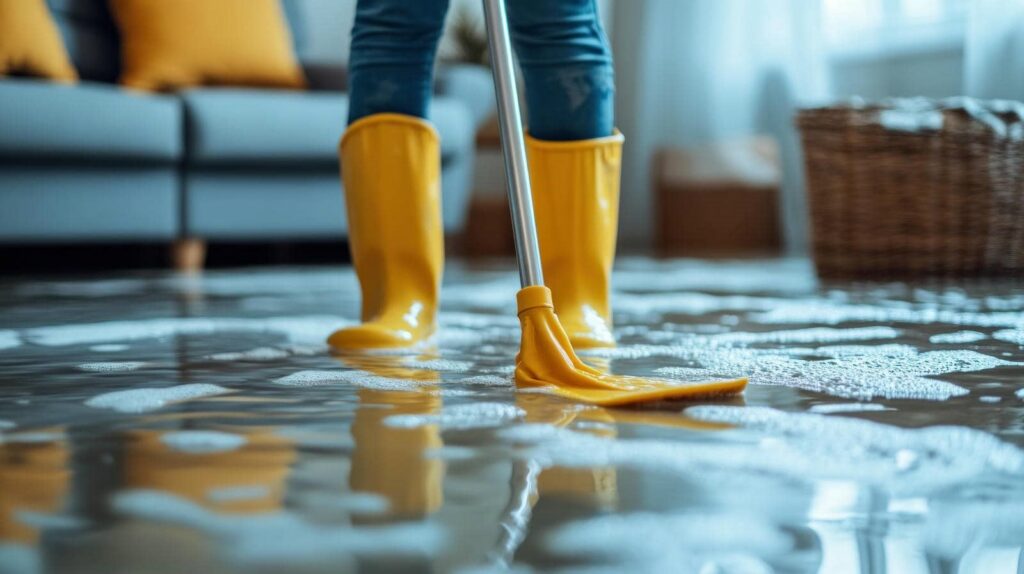
After a flood, you need a structured approach to cleanup. First, evaluating the damage is important to identify hazards. Then, powerful extraction tools will help remove standing water effectively. Once the water’s gone, drying and airflow become essential to prevent mold. Finally, knowing when to call in professionals can make a significant difference. Each post-flood cleanup step is critical, and understanding how to execute them can enhance your recovery process. What comes next may surprise you.
Key Takeaways
- Conduct a thorough damage assessment and document issues to support insurance claims and prioritize cleanup efforts.
- Use powerful water extraction tools like submersible pumps and wet/dry vacuums to remove standing water efficiently.
- Employ industrial fans and dehumidifiers to dry affected areas and prevent long-term structural damage and mold growth.
- Control indoor humidity levels below 60% and improve ventilation to inhibit mold development after flooding.
- Hire professional restoration services if water exposure exceeds 24 hours or if there are signs of hidden mold and structural damage.
Essential Tools for Flood Cleanup
When tackling flood cleanup, having the right tools at your disposal is essential for an efficient and effective process.
Start with powerful water extraction equipment to remove standing water quickly, reducing the risk of mold and further damage. Consider using submersible pumps or wet/dry vacuums based on the severity of the flooding.
Once the water’s cleared, it’s time to deploy drying equipment, such as industrial fans and dehumidifiers, to eliminate moisture from walls and flooring. This step is vital for preventing long-term structural issues.
How to Assess Flood Damage and Prioritize Cleanup?
After clearing the water and drying out your space, it’s time to assess the flood damage and prioritize your cleanup efforts.
Start with a thorough damage evaluation. Walk through each room, noting structural issues, damaged belongings, and hazardous materials. Take pictures for documentation, which can aid in insurance claims.
Next, categorize your cleanup priorities by urgency. Focus on electrical hazards and structural integrity first, as these pose immediate risks.
Then, address items that can be salvaged, like furniture and appliances, while discarding irreparable items safely.
How to Effectively Remove Water and Dry Your Space?
To effectively remove water and dry your space, start by gathering the necessary equipment, such as pumps, wet vacuums, and fans.
Begin with water removal by using a pump to eliminate large volumes of standing water. Once that’s done, employ a wet vacuum for residual moisture on floors and carpets.
Next, focus on drying techniques; place fans strategically to promote airflow throughout the area. Open windows to enhance ventilation if the weather permits.
For more thorough drying, consider dehumidifiers, which can greatly reduce humidity levels.
Monitor the process closely, ensuring all surfaces are completely dry to prevent further issues.
Preventing Mold After Flooding
Successfully removing water and drying your space lays the groundwork for preventing mold growth.
To achieve effective mold prevention, follow these systematic strategies:
- Control Humidity: Keep indoor humidity below 60% using dehumidifiers and air conditioners.
- Improve Ventilation: Open windows and use exhaust fans to promote airflow in damp areas.
- Inspect Regularly: Check for leaks in plumbing, roofs, and windows to catch moisture issues early.
- Clean Thoroughly: Use mold-inhibiting cleaners on surfaces that might’ve been affected.
When to Hire Professional Restoration Services
When should you consider hiring professional restoration services after a flood? If you notice signs of damage such as warped floors, stained walls, or persistent odors, it’s time to take action.
Water can infiltrate your home deeply, causing hidden mold growth and structural issues. When to hire these experts is often dictated by the severity of the damage.
If the water exposure exceeds 24 hours, or if you’re dealing with contaminated water, professional help is essential. They possess specialized equipment and expertise to assess the situation accurately and perform thorough restorations.
Don’t underestimate the risks; timely intervention can save you from more extensive damage and costly repairs. Your home deserves the best care after such an event.
Frequently Asked Questions
What Should I Do Before Starting the Cleanup Process?
Before starting the cleanup process, you should take essential preparation steps. Gather necessary supplies, assess safety precautions, and guarantee your safety gear’s in place. This systematic approach helps protect you and guarantees an efficient cleanup.
How Can I Safely Dispose of Contaminated Materials?
To safely dispose of contaminated materials, categorize them as hazardous waste, then contact local waste management for guidelines. Make certain you wear protective gear during handling, promoting both safety and community responsibility in the cleanup process.
Will My Insurance Cover Flood Cleanup Costs?
Your insurance policies might cover flood damage, but it depends on your specific plan. Review your coverage details carefully, and don’t hesitate to contact your insurer for clarification on what’s included regarding cleanup costs.
What Health Risks Are Associated With Floodwaters?
Floodwaters pose significant health risks, including exposure to waterborne diseases and chemical hazards. You’re at risk for infections and toxic effects if you come into contact with contaminated water, so always prioritize safety and protective measures.
How Long Does the Cleanup Process Typically Take?
In your flood recovery journey, think of it as planting a garden. The cleanup timeline can take weeks to months, depending on damage severity. Each step nurtures recovery, fostering a community’s resilience and growth.
Final Thoughts
In the aftermath of a flood, addressing cleanup swiftly is like putting together a puzzle each piece must fit perfectly to restore your space. By systematically evaluating damage, removing water, and preventing mold, you can reclaim your environment. Remember, if structural issues arise or you’re overwhelmed, it’s wise to seek professional help. Taking these steps guarantees a thorough recovery, allowing you to move forward with confidence and peace of mind. Don’t underestimate the importance of a well-executed plan.