
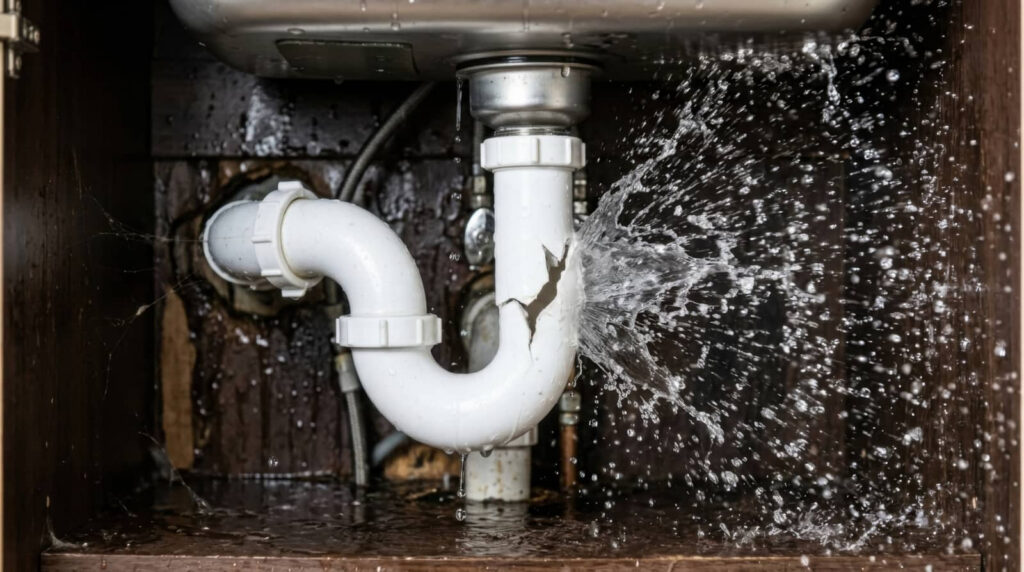
A burst pipe can turn hidden moisture into a mold problem within 24 to 48 hours, so your first steps matter. Burst Pipe Mold Cleanup should begin by shutting off the water, removing wet porous materials, and drying the area quickly before mold can spread. Use gloves, eye protection, and an N95 when cleaning hard surfaces. If the damage is widespread, moisture is trapped behind walls, or the odor lingers, professional cleanup may be needed to address what you can’t see.
Key Takeaways
- Shut off water immediately and remove standing water with towels, a wet vac, or a pump.
- Dry the area fast using fans, open doors, and a dehumidifier to prevent mold growth.
- Discard soaked porous materials like drywall, insulation, and carpet padding that won’t dry quickly.
- Clean hard surfaces with detergent and water, then use an EPA-registered antimicrobial if needed.
- Call professionals if mold spreads, hidden cavities are wet, or musty odors remain after drying.
How to Stop Mold After a Burst Pipe
Act quickly after a burst pipe to stop mold before it starts. Shut off the water, isolate the affected area, and protect your household’s shared space.
Remove wet contents that you can safely move, then inspect walls, floors, and insulation for saturation. Use preventive measures by opening windows, running fans, and setting dehumidifiers to restore moisture control.
Discard porous materials that stay soaked, because they can trap spores and spread contamination. Clean hard surfaces with detergent and water, then apply an EPA-registered antimicrobial if the surface allows it.
Wear gloves, eye protection, and an N95 respirator while you work. If you see widespread damage or hidden dampness, call a qualified restoration professional promptly so your home stays safe and your team stays supported.
Dry Water Damage Before Mold Spreads
Dry the water damage as quickly as possible, because lingering moisture gives mold a chance to grow.
Start with water extraction: remove standing water with a wet vac, pump, or towels, then discard saturated materials that won’t dry fast.
Open interior doors, run fans to move air across damp surfaces, and keep HVAC airflow from pushing humidity deeper into the area.
For moisture control, set a dehumidifier to pull vapor from the room and check walls, baseboards, and flooring with a moisture meter.
Lift rugs, separate furniture from walls, and expose hidden pockets behind trim.
You’re not alone in this process; steady, methodical drying protects your space and helps your household regain a clean, stable environment before mold gets established.
When to Call Mold Cleanup Professionals
If mold has already spread beyond a small, surface-level area, call a professional cleanup team to assess and contain it.
You should also reach out if the damaged wall cavity, flooring, or HVAC system was exposed, because hidden growth can escalate fast.
A certified crew will perform a mold inspection, identify moisture sources, and set containment before demolition starts.
If anyone in your home has asthma, allergies, or is immunocompromised, don’t wait; the health risks rise with every delay.
You belong in a safe, controlled cleanup process, not in a guess-and-clean cycle.
Professionals use negative air, HEPA filtration, and moisture verification to confirm the job’s done right.
If you smell musty odors after drying, that’s another clear trigger for expert help.
Frequently Asked Questions
How Do I Prevent Mold From Returning After Cleanup?
You prevent mold by drying all surfaces quickly, fixing leaks, using mold prevention strategies, and maintaining humidity control below 60%. Inspect daily, clean with antifungal products, and seal porous materials so your space stays protected.
What Insurance Usually Covers Burst Pipe Mold Damage?
Like a safety net, you’ll usually get mold coverage if your homeowners policy covers sudden burst pipes; file insurance claims fast, document damage, and review exclusions, because gradual leaks often won’t qualify.
Can Mold Grow Inside Walls After a Pipe Burst?
Yes, mold can grow inside walls after a pipe burst if water damage stays trapped. You’ll need to dry cavities fast, inspect insulation and framing, and monitor hidden mold growth with moisture meters and removal.
Are HEPA Vacuums Necessary for Small Mold Spots?
Not always; for small spots, you can clean carefully with detergent and HEPA-filtered vacuuming improves air quality, but you’ll still need containment, PPE, and complete drying to support effective mold removal and protect your team.
How Long Should Carpets Stay Removed After Flooding?
Keep carpets removed until they’re fully dry, usually 24–72 hours; if you leave them, they can become a swamp. You should verify carpet drying with moisture readings during flood restoration, then reinstall only when levels match surrounding materials.
Wrap-Up
When you face a burst pipe, act fast so moisture doesn’t become a breeding ground for mold. Dry the area thoroughly, remove soaked porous materials, and disinfect hard surfaces with care. Your gloves, mask, and eye protection are your shield against hidden contamination. If the damage spreads or odors linger, call a professional before the problem deepens. Treat the leak like a warning light: stop it early, and you’ll protect your home’s structure and health.