
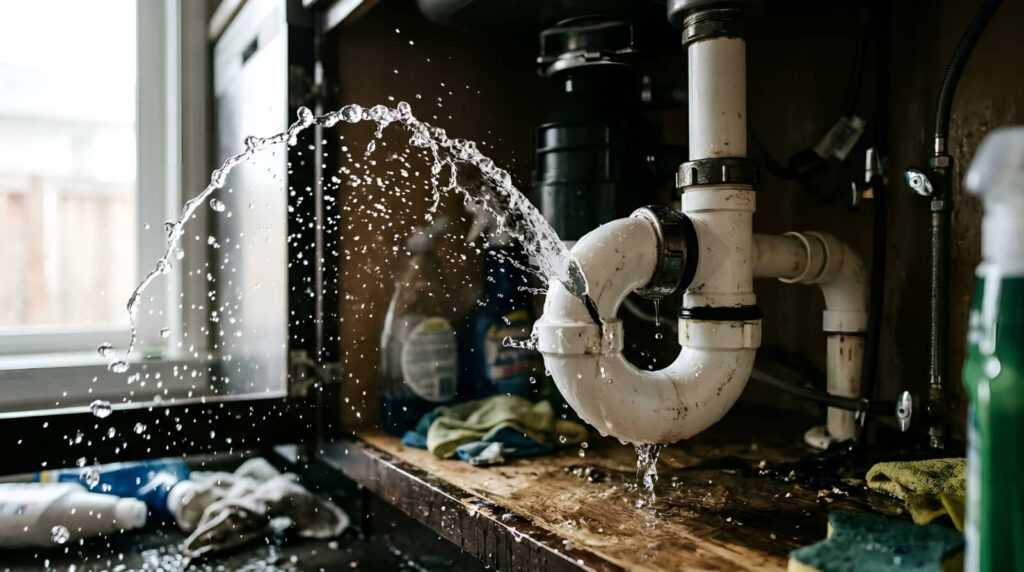
When a pipe bursts, you need to move fast: shut off the main water and cut power to the affected area, then document the burst pipe damage before you touch much else. Standing water can spread into walls, flooring, and hidden spaces in minutes, and moisture problems don’t always show right away. The next steps determine how much you can save, how safely you can clean up, and what you’ll need to fix next.
Key Takeaways
- Shut off the main water supply and electricity immediately if water reaches outlets or appliances.
- Contain the leak with towels or buckets and avoid standing water near energized equipment.
- Document all damage with photos, videos, and a written inventory for insurance and repair records.
- Start drying the area right away using fans, dehumidifiers, and removed wet materials to prevent mold.
- Check for hidden moisture, clean contaminated surfaces, and repair the burst pipe promptly.
Stop the Water and Shut Off Power
If water is still flowing, shut off the main water supply immediately to stop further damage.
Then kill power at the breaker if water has reached outlets, appliances, or the service panel. You’re protecting your home and keeping your crew safe.
Use emergency preparedness habits: know where the shutoff valve and electrical panel are before you need them. If the valve won’t turn, don’t force it; call your utility or a plumber.
Keep out of standing water near energized equipment. Unplug devices only if you can do it dry.
Once power is off, check for active leaks and contain them with towels or buckets. Quick action limits water damage and helps your household stay calm, coordinated, and ready for the next step.
Document the Damage for Insurance
Once the water is off and the area is safe, document the damage for your insurance claim right away.
Take clear photos and video of every affected room, pipe, fixture, wall, floor, and item from wide and close angles. Capture the source of the burst, visible water paths, and any labels, model numbers, or serial numbers.
Make a simple damage assessment list that notes what’s damaged, where it sits, and whether it’s repairable or needs replacement.
Save receipts for emergency services, supplies, and temporary fixes. Keep dates, times, and the names of anyone you speak with at the insurer.
Back up files to cloud storage and email copies to yourself. If you stay organized now, you’ll make the claim process smoother and protect your place.
Dry Out Floors, Walls, and Belongings
Start drying the affected area as soon as possible to limit mold, warping, and structural damage. Open windows if weather allows, and run fans plus dehumidifiers to move air across floors, walls, and trim.
Remove rugs, cushions, and loose items so moisture can escape faster. Lift wet carpet edges and place aluminum foil or plastic under furniture legs to protect finishes.
For floor drying, keep airflow low and steady, and change wet towels or absorbent pads often. On painted drywall, remove baseboards if they trap water.
Sort damp belongings by material, then dry textiles, paper, and electronics separately. For belongings restoration, clean and dry each item promptly, and store recovered pieces in a clean, ventilated space until they’re fully stable.
Check for Hidden Moisture and Mold
Check behind walls, under baseboards, and inside cavities for hidden moisture after a burst pipe.
Watch for mold growth signs like musty odors, discoloration, and soft or warped materials.
Keep drying equipment running and maintain strong ventilation until moisture readings return to normal.
Hidden Wall Moisture
Water can hide inside wall cavities long after the visible flood is gone, so you need to inspect for trapped moisture and early mold growth.
Use moisture detection tools to check drywall, trim, and framing near the leak path. During wall inspections, look for damp insulation, swollen baseboards, and cool spots that suggest water is still present.
If readings stay elevated, remove small access sections so you can confirm the cavity is drying properly. Run fans and dehumidifiers to speed evaporation, and keep indoor humidity low.
You should also document findings and retest each area until levels return to normal. Acting quickly helps you protect your home, limit repair costs, and stay confident that your space is safe.
Mold Growth Signs
Mold can begin growing within 24 to 48 hours after burst pipe damage, especially where moisture lingers inside walls, under flooring, or behind trim.
You should inspect for dark spotting, fuzzy patches, musty odors, and paint that bubbles or stains again after cleanup. Check baseboards, drywall seams, insulation, and subfloor edges for discoloration or softness.
If you see condensation, warped materials, or repeated dampness, treat it as a warning sign. These clues point to hidden moisture and possible colony growth, so act fast to support mold prevention.
Don’t ignore symptoms like coughing, eye irritation, or headaches, because mold exposure can create real health risks for your household.
If you suspect spread, document the area and contact a qualified restoration professional quickly.
Drying And Ventilation
Start drying the area immediately to stop moisture from settling into hidden cavities and to limit mold growth. Open windows if weather allows, and run fans to improve air circulation across floors, walls, and trim.
Use dehumidifier usage in closed rooms to pull moisture from the air and speed material recovery. Check behind baseboards, under cabinets, inside wall voids, and beneath flooring for dampness that surface drying can miss.
You can belong to the group of homeowners who act fast and avoid secondary damage by monitoring humidity and touching suspect areas daily. If materials still feel cool or smell musty, keep drying equipment running.
Remove wet insulation, carpet padding, or drywall that won’t dry quickly, and inspect hidden spaces again until everything feels dry.
Test for Mold After a Burst Pipe
Even after you dry the area, you should test for mold if the burst pipe soaked drywall, insulation, flooring, or cavities you can’t inspect directly.
Use mold testing when you see staining, musty odor, or lingering dampness, and document any readings or visible growth. If you suspect hidden moisture, a qualified inspector can sample air or surfaces and confirm whether spores are elevated.
Don’t assume a dry surface means the assembly is safe; mold can start within 24 to 48 hours. Testing helps you decide whether you need deeper repairs and supports prevention strategies that reduce repeat damage.
Keep humidity low, improve drainage, and monitor adjacent rooms so you stay ahead of concealed contamination and protect everyone sharing the space.
Clean Up Burst Pipe Damage Safely
Before you clean up burst pipe damage, shut off the water and electricity to the affected area, then wear gloves, boots, and a respirator if contamination is possible. Move carefully and keep your team informed so everyone stays protected.
Remove standing water with a wet vacuum, mop, or pump from your emergency supplies. Bag soaked debris, insulation, and porous items that can’t dry quickly. Open windows and use fans to improve airflow, but keep cords and outlets away from wet floors.
Clean hard surfaces with detergent and disinfectant, following label directions. Check for hidden moisture behind baseboards and under flooring.
Follow safety precautions, and don’t rush the process; thorough cleanup lowers health risks and helps your home recover faster.
Repair the Pipe and Prevent Future Bursts
Once the area is dry and safe, inspect the burst section to find the failure point and decide whether you can patch, replace, or need a plumber’s help.
Shut off the water, cut out damaged pipe, and install approved fittings with the right sealant. Tighten joints, then test under pressure for leaks before restoring service.
Good pipe maintenance keeps your home in the safe circle of prepared owners, not the panic group. Use insulation techniques on exposed lines, especially in attics, basements, and exterior walls.
- Frost on copper
- A split seam
- Damp drywall edges
- Wrapped foam sleeves
- A clean, pressure-tested joint
Frequently Asked Questions
How Soon Should I Call a Plumber After a Burst Pipe?
Call a plumber immediately—within minutes—after you shut off water. You’ll reduce damage, support emergency response, and start preventive measures. If you act fast, you’re joining others who protect their home the right way.
Can I Stay Home After Severe Burst Pipe Flooding?
No—can you really gamble with soaked wiring and hidden hazards? Prioritize home safety: shut off power, assess structural risk, and follow evacuation plans if water’s deep, rising, or contaminated. Call emergency services and your insurer.
Will Homeowners Insurance Cover Temporary Housing Costs?
Yes, your homeowners insurance may cover temporary housing costs if your insurance policy includes loss-of-use protection, but you’ll need to check coverage limits and document expenses promptly to get reimbursed quickly.
Should I Throw Away Food Exposed to Contaminated Water?
Yes, you should throw away any food exposed to contaminated water; contamination risks are high. For food safety, discard sealed packaging if water touched it, and clean your refrigerator thoroughly. You’re protecting everyone’s health here.
How Do I Find a Reliable Water Damage Restoration Company?
You can find a reliable company by checkinand ensure clarityg licenses, insurance, IICRC certification, and recent reviews. Ask for water restoration tips, compare estimates, and focus on choosing professionals who explain drying methods, timelines, a and timelinesnd ensures clearly.
Final Thoughts
When a pipe bursts, you need to act like a first responder in your own home: shut off the water, cut the power, and document everything fast. Then dry the space thoroughly, hunt down hidden moisture, and test for mold before it spreads like an unwanted shadow. Clean carefully, repair the damage, and reinforce weak spots so the next freeze doesn’t crack your defenses. Quick, steady action keeps small leaks from becoming a flood of costly repairs.